Louisa Sara Floyer
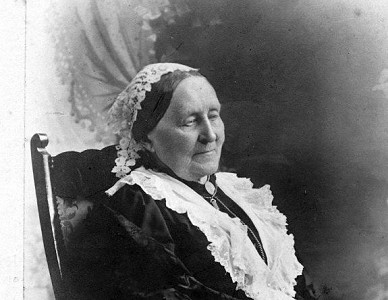
Louisa Floyer. Credit rootsweb.com
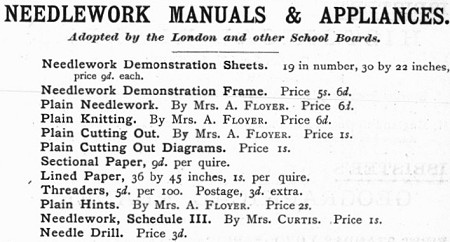
Newspaper announcement, 1884
A visitor to the museum, Janet Taylor, brought to our attention Mrs Louisa Sara Floyer, a pioneer in the movement for the systematic teaching of plain needlework to girls.
Louisa, born in Devon in 1830, was the daughter of Hon F J Shore of the Bengal Civil Service. In 1849, she married Rev Ayscoghe Floyer, Rector of Marshchapel. Ayscoghe was the son of John Gould Floyer, who in his later years lived in Westgate Louth; he was described as a man rather severe in disposition, who kept many servants and a yellow chariot!
From 1849 to 1870, Louisa and Ayscoghe lived in the parsonage in Marshchapel, about ten miles north of Louth. Louisa campaigned for girls to be taught knitting and needlework, and in 1860 she was instrumental in forming the Louth and Neighbourhood Association for the Improvement of Needlework in National Schools. As most people wore knitted stockings, knitting was an everyday necessity as well as a marketable skill for future income.
Ayscoghe became unwell – an infection in his right eye initiated by typhus necessitated the extraction of half the eye. He became paralysed in 1869 and resigned from his living in Marshchapel.
The family moved to live at Putney with Louisa’s mother. There Mrs Louisa Floyer became the first Inspector of Plain Needlework under the London School Board (at a salary of £100 per year). In 1878 Louisa started a training school for teachers, which became the London Institute for the Advancement of Plain Needlework. She developed methods of demonstrating the details of needlework and knitting which were easily seen and understood by classes of girls, she gave public lectures, and she produced several books and booklets.
Louisa spent her last 25 years in Hampshire where she continued to promote needlework and knitting, and also cottage cookery. She died in Basingstoke in 1909.
Louisa and Ayscoghe had two sons and three daughters. Eldest son Ernest Ayscoghe Floyer was a British colonial official well known for his explorations in the Baluchistan area of Pakistan and the eastern desert of Egypt. He explored the economically useful plants and materials of interest along his travels.