John Boyers, a blind working-class man
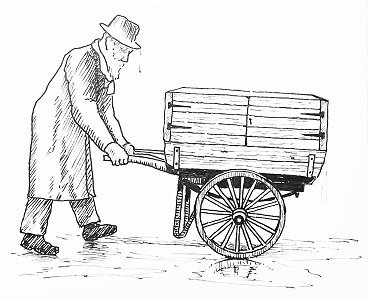
John Boyers. Credit Trevor Bounford
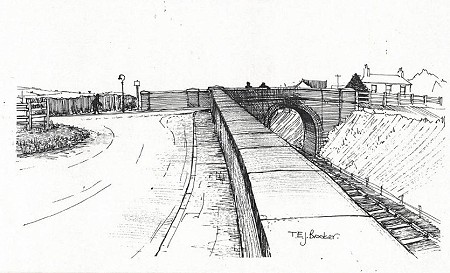
Newmarket bridge. Credit Tom Brooker
A small exhibition in the library of Lincoln University on the subject of disability inspired me to find out more about the lives of people in Louth who were disabled in some way. I already knew of three former residents with a serious disability. The first was Frances Kirman, born during the Louth Flood of 1920, who was (totally unrelated to the circumstances of her birth) completely deaf. She became a hairdresser. The second was Jesse Hall who lost his sight in an unfortunate accident with gunpowder at the age of eleven, but who became a musician and ran a music shop in Eastgate. The third was Henry Pye, a solicitor whose leg had to be amputated after a riding accident. These people all coped well with their problems, and were active members of the community.
For most disabled people life was difficult, but their struggles were rarely chronicled. Searching through newspapers, I found several references to a blind working-class man called John Boyers. His story was recorded because he was the victim of theft.
John Boyers had been born in 1820 in the small village of Asterby, about 8 miles southwest of Louth. His parents were agricultural labourers. It seems that John had functional eyesight when he was a young person, and he was working as an agricultural labourer in Gayton-le-Wold in both 1841 and 1851. However, at the age of 41 he was back home with his parents on the Kenwick side of Legbourne, and now described in the census as blind.
Supported by his parents, John was able to earn a meagre living with a small grocery business. It appears that his mother ran the shop at home, while John took out a cart selling groceries around the villages. John’s father was still working as a labourer even in his 70s. This was long before old-age pensions were introduced, and older people were expected to continue working as long as they could.
It was in January 1890 after both his parents had died, that John Boyers, now living with one of his younger brothers, was robbed and his story was reported in newspapers:
Dastardly Robbery. A heartless robbery took place on the highway near the bridge over the Lincoln line in Newmarket. The person robbed was John Boyers, a blind man, who is a travelling hawker and resides at Legbourne. For 31 years he has hawked, and the old man pushing along his hand-cart is a familiar and respected figure. Robbing a man who is not in possession of sight is an unpardonable crime.
John Boyers was proceeding home from Louth at about one o’clock on Saturday afternoon, in pouring rain. He was accosted by a man who said he required a quarter of a pound of tea, which was served to him, and for payment a florin [2 shillings] was tendered. The tea being only sixpence, change was given, the cart locked up and the journey home resumed. But very soon, the same man asked for a pound of lump sugar. The cart was again unlocked and the sugar handed over. When John Boyers got out his purse for the second time, the man grabbed it and ran away. The purse contained £1 13s, of which 15 shillings had been entrusted to Boyers to be paid into the club.
A witness told the court that he had seen Boyers and a young man together on the railway bridge. When the alleged thief was brought into the presence of Boyers, Boyers recognised his voice. Earlier in the day they had spoken in Upgate, when the young man had asked at what time Boyers was returning to Legbourne. The thief, whose father was a cattle dealer and butcher, was from a respectable family.
The young man admitted to the police that he had stolen the money and spent it at the Saltfleet pigeon shooting match, where he lost a sovereign in betting with a Hull man. He was committed for six weeks hard labour in Lincoln prison, and his father refunded the stolen money.
The poor law system in the 19th century was stingy, and even though John Boyers had a serious disability, he would have received little if any help from the parish. The comment about money to be paid into “the club” probably refers to the Legbourne Foresters’ Friendly Society, which was very active at that time. Its primary purpose was to provide support for working people. Members paid small regular contributions into a fund, which was then used to provide sick pay if they were too ill or injured to work.
From the written narratives, I sense that there was a lot of community support for blind John Boyers.