Lance Kaye, a World War II evacuee
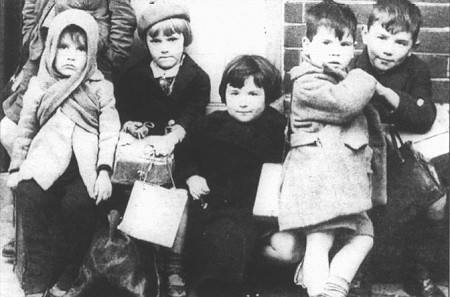
Evacuees waiting for the train in Leeds
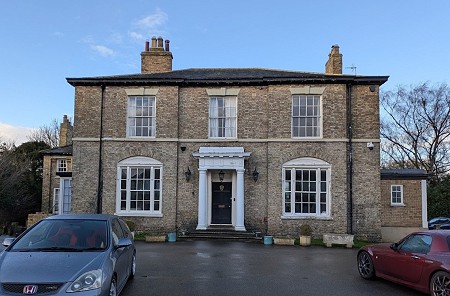
Park House
At the beginning of September 1939, a total of 773 evacuees were sent from the Leeds area to Louth. Considering that the population of Louth was less than 10,000, it was an enormous influx. Unaccompanied children arrived one day, and then mothers with very young children the next. One of the evacuees was ten-year-old Lance Kaye, who many decades later wrote an account of his experiences.
Newspaper reports tell us that many evacuees arrived by train, but Lance came on a bus. Each child had a brown paper bag containing their belongings. “On the bus, some of the younger children were crying, mostly for their mothers, which would bring a response from one of the adult carers to comfort and reassure them. I too felt like crying. Being sent away from home made me feel abandoned.
“Looking out of the bus window, it was the first time I had ever seen the countryside. All I knew was from books and pictures. I saw the autumn colours of the leaves. The hundred-and-one shades of green fields. The long straight furrows the farmer makes with his plough. Haystacks covered with a tarpaulin against the winter. It all made a big impression on me.
“We were offloaded from the bus, and taken to a large room full of people. We felt helpless and subdued. There was pushing and shouting. Children were crying. Anyone, it seemed, who took a shine to us, could take us away.
“I, together with another boy, was picked by a Miss Ricketts. She took hold of us by our hands and led us out into the cold evening. We walked what seemed an awful long way until we came to a big detached house [Park House, 211 Eastgate]. In the front room we met Mr Ricketts [George Ricketts, formerly a teacher in Grimsby]. He was a very nice old gentleman, who asked us questions about ourselves, as we all sat in armchairs round a big open fire.
“The back garden, I’d never seen anything like it before, was massive and there was a big orchard with apples, pears and plums. We were allowed to pick whatever fruits we wanted as long as we did not waste them. Beyond the orchard, the River Lud flowed left to right. A true source of enjoyment.
“Mr Ricketts taught me how to build paper boats, and throw them into the water so they always fell the right way up. In the evenings Miss Ricketts played the piano, or went to her sewing or knitting, and we boys played Lexicon [a game rather like Scrabble] or cards with Mr Ricketts”.
Lance and his fellow evacuees attended school. Lance had the impression that the evacuees were more advanced in education than the local boys, and this led to jealousy and conflict. He wrote, “No friendships were ever formed that I knew of”. School with its frequent fights was not a happy experience.
“It must have been quite early spring when Mr Ricketts took us for a walk to some woods. It was a sight I have never forgotten. Trees were wearing their new spring coats of various greens, and were shining in the sunlight. There was a carpet of wild primroses. It was truly beautiful.
“One day Miss Ricketts told us that we would be leaving them, and we needed to quickly pack our things. She said she was sorry, and began to cry. We never knew the reason why we were being sent away. Was it because Mr Ricketts had died?” In fact, Mr Ricketts had not died. We now know that Park House was commandeered to become the HQ for locally-based regiments. Presumably Miss Ricketts was not allowed to pass on this information.
The two boys were moved to a small terraced house, the middle one in a row of five. They lived with “a lady small in stature, who could have been anybody’s grandmother”. This house too was down by the river.
But they didn’t stay there long. In August 1940, Lance and many others were relocated to Bewerley Park Camp near Pateley Bridge in Yorkshire. This time they travelled on green Lincolnshire Road Car Buses, and there was no crying, but some excitement. Lance recalled, “My most cherished memory of Louth was the time I spent walking with Mr Ricketts”.