William Watkinson
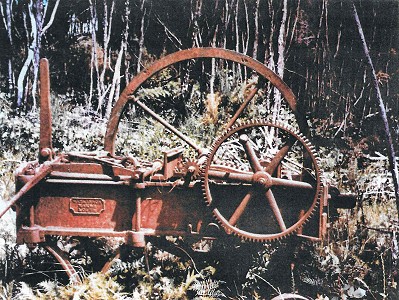
Brickmaking machine in New Zealand
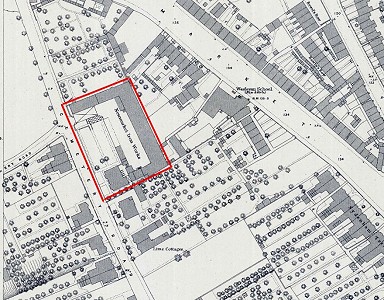
Watkinson's works in Linden Walk
William Watkinson, born at Kirton in Lindsey in 1807, worked as a wheelwright in Brigg before taking over a blacksmith and machine maker’s business in Louth in 1828, where he remained until his death in 1882. Watkinson was variously described in trade directories and census returns as agricultural implement maker, iron and brass founder, machine maker and machinist.
In common with other small businesses of this type in Lincolnshire, Watkinson made a wide range of agricultural implements and machinery, in his case very successfully. At agricultural shows in the 1850s and 1860s he won prizes for his general-purpose seed drill, liquid manure drill, clod crusher, roller and horse hoe. Newspaper reports of farm sales in the second half of the nineteenth century, which often included details of machinery, mention his cake breakers, horse drags, turnip drills, corn mills, straw elevators and dressing machines.
It is uncertain when Watkinson first made a machine for the brick and tile industry. The earliest mention in newspapers appears to be July 1850 when his tile machine was awarded a prize of £3 at the North Lincolnshire Agricultural Show. In 1853 he exhibited an ‘improved’ brick and tile machine, and four years later, he exhibited a ‘machine for making drain pipes and tiles, invented and manufactured by himself’. There were frequent references to his machinery in newspapers when brickyards changed hands or closed down. Over 40 such reports have been identified, most commonly mentioning a brick and tile machine or simply a tile machine, but also occasionally a brick press, a paving press, a pipe machine and, in one instance, a clay crusher. More than one report adds the term ‘patent’ to his brick and tile machine, but the date and details of his patent have not been investigated.
William Watkinson appears to have run a successful business, though no financial or other records which might provide detail are known to survive. The national census of 1861 records that he was employing 6 men and 3 boys. Ten years later his workforce had risen to 13 men and 2 boys, possibly when the business was at its most successful. Relationships with these employees was strengthened by an informal annual supper held in the works premises. His only son, George, joined the business in about 1855 but died in 1875 at the age of 47, seven years before William. After William’s own death the Watkinson business came to an end and the workshop and premises were taken over by Thomas Ashley, to be followed in the twentieth century by MacDonald Engineering, who remain in business today.
At the time when Watkinson was making brick and tile machines there were several other Lincolnshire firms making similar products, but none of these names appear in Lincolnshire brickyard and machinery sales details of the late nineteenth century as frequently as Watkinson’s. His machinery would seem to have been the first choice for many brickyards, especially the smaller ones when introducing machinery for the first time into what previously had been an entirely manual process.
One of his brick and tile machines found its way to the Paparoa Brickworks in New Zealand. It is now on display, fully restored, in the Kauri Museum, Matakohe, Northland. No other items of brick or tile making machinery by Watkinson are known to survive, either in Lincolnshire or elsewhere.