William Wilson, solicitor
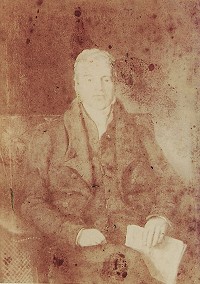
William Wilson, 1811
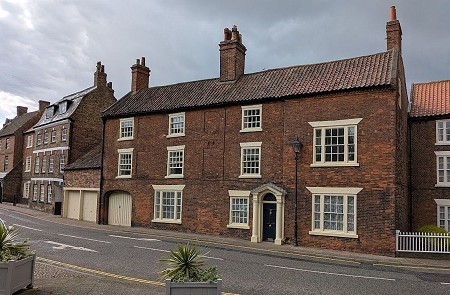
82 Westgate
William Wilson was a prominent and much-respected member of the Louth community. Born in 1765, his father was a solicitor in Lancashire, and many other members of the family were also solicitors, or attorneys as they were known at that time. William qualified in 1787 and moved to Louth to work with attorney Charles Wigelsworth who lived in Westgate House.
We are fortunate to have some original letters written both to William Wilson and by him, and we have many details of his life recorded in the memoirs of his son James. The only picture we have of him (it was before photography was invented) is a copy of his portrait kindly given to Louth Museum many years ago by a relative in New Zealand.
James tells us that when William first came to Louth, he lodged in Harvey's Alley, now called Westgate Place. After a time, he bought a house in Paradise, which must have been the house that is now 47 Kidgate, adjacent to Paradise Smoot. It had two bow-windows, a neat garden surrounded by three brick walls, and a good orchard.
Not long after his arrival in Louth, William seems to have secured the confidence of the gentry and principal tradesmen, for in 1790 he was appointed secretary of the Commissioners of the Louth Navigation, and also secretary of the Louth Association for Prosecuting Felons. He was soon promoted to become Charles Wigelsworth’s junior partner.
Charles Wigelsworth was an enterprising person. Not only was he an attorney, but he also bought the Thorpe Hall corn mill and converted it to become a paper-making mill, and he set up the first commercial bank in Louth. Unfortunately, the bank failed which resulted in many local people losing their savings and, consumed by depression and shame, Wigelsworth became mentally ill and died in 1799.
William Wilson set up his own solicitor’s practice. In 1806, when he was 40, he married Catherine Ludlam, a farmer’s daughter from Fulstow. Their engagement had been of long standing in consequence of her delicate state of health. The newly-married couple moved into the Georgian house that is now 82 Westgate, close to St James’ Church. It was large enough to provide office accommodation, and had a garden going down to the river Lud.
Four surviving children were born to William and Catherine. After a still-born son, there came daughter Catherine, twins Elizabeth and James, and finally Susanna. James followed in his father’s footsteps and became a solicitor.
The documents in the museum are written in neat handwriting, but which we find rather difficult to read. They refer to a selection of diverse legal matters of the day including financial transactions.
One letter dated 1822 is to demand payment: “Sir, Mr David Parkinson to whom you are indebted in the sum of four pounds and five shillings [almost £500 in today’s money] for ewes and lambs sold and delivered, has directed me to inform you that unless that sum is paid immediately to me, an action will be brought for the recovery thereof without further notice.” This letter was returned to William Wilson, “No such person known at Colsterworth”. Presumably the dodgy sheep dealer had given a false name and address, and I fear that David Parkinson, a small farmer in North Somercotes, never received his dues.
There are also a few personal details. In a business letter dated 1804 William’s elder brother Henry Porter Wilson, a solicitor in Alford, added “Pray don’t overfatigue yourself and get to bed early at night as I am afraid of you suffering in your health.”
According to his son’s memoirs, William died a painful death in 1831. Obituaries tell us that he was a universally respected solicitor and senior member of the corporation. James described him as a sound protestant churchman, and in politics a good Conservative, who always supported the Conservative interest at the county elections. He was a captain of volunteers at the time Napoleon was threatening an invasion of England. He was a good conveyancer, most punctual in his attendance at his office, and liberal in lending his money to his clients, by whom I found at his death he lost a considerable amount of money.