Hate him or rate him, King John was the only monarch to ever visit Louth
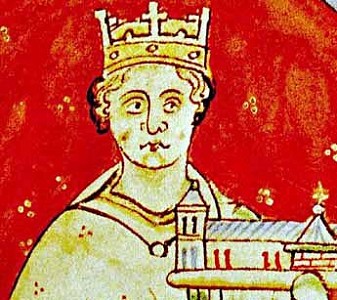
King John from Matthew Paris
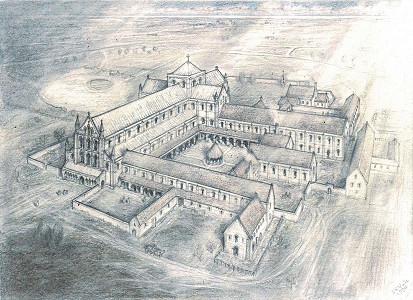
Artist's impression of Louth Park Abbey
If there’s one question that puzzled local historians for hundreds of years, it was this: was King John ever in Louth? Rumours circulated for centuries and the arguments for and against were raging for long enough to make King John’s famous battle with his barons, which resulted in Magna Carta, look like a sideshow. But J E Swaby, historian in the mid-20th century, undertook detailed research, and now the truth can be told. King John was here in Louth, and not once, but twice.
We know this from court records, or pipe rolls, which record the administrative decisions and legal rulings made by medieval monarchs. Back in the 12th and 13th centuries ruling monarchs didn’t sit in their palaces and let the great and the good of the country attend to them. Instead, they saddled up and took their administrations on the road travelling the length and breadth of the country collecting taxes, settling disputes and dispensing justice. It was literally government on the hoof. (Andy Burnham take note, Number 10 North isn’t anything new, the Plantagenets were taking government to the regions well over 900 years ago.) A court secretary travelled with the monarch and it was his job to write down what rulings were made and where the court was in session at the time. According to the Magna Carta Project, King John stayed in Louth Park Abbey on 18th January 1201. While in Louth he presided over a murder case in which Alice of Whatley was accused of killing her husband, a wealthy landowner.
More interestingly though, King John’s Patent and Close Rolls for October 1216 place him in Louth again and record him granting land to William of Newton, a retainer of Nichola de la Haye, the castellan of Lincoln Castle. The date is significant because it places King John in Louth during a crucial phase of the First Barons’ War.
After adding his seal to the Magna Carta, King John reneged on the agreement plunging the country into civil war. Whereupon the rebel barons invited Prince Louis of France to invade England and declare himself king. King John at the head of his army, which was largely made up of mercenaries, had recently relieved the siege of Lincoln Castle and was marauding through Lincolnshire punishing rebel barons and seizing their lands and wealth. It was while he was on his way from Grimsby to St Mary’s Abbey at Swineshead and Lynn that he stopped in Louth on 4th October 1216, probably overnighting again at Louth Park Abbey. He had notched up a few victories, his coffers were bulging with coin and as he rested his weary head upon the pillow in Louth that night, he must have thought the tide of the war was turning in his favour. Little did he know. Two weeks later, he would be lying dead in Newark Castle.
In the end it was another tide that did for King John. As his baggage train containing most of his worldly goods, including his armaments and the crown jewels, was crossing the Wash, it was swallowed up by quicksands, never to be seen again. Devastated, left relatively powerless and penniless, and staring defeat in the face, King John journeyed on to Newark. For some time he had been suffering from dysentery brought on, as the legend has it, “by a surfeit of peaches”. But whatever the cause of his ailment King John died in agony in Newark Castle on the night of 18th/19th October. He was 49 years old. This blog is published 810 years after this event, almost to the day!
History is pretty damning about King John saying he was cunning and cruel. Together with Richard III, who may or may not have murdered the little princes in the Tower, he remains one of England’s most reviled and villainous kings. So much so that after his death the 13th century chronicler, Matthew Paris, wrote: Sordida foedatur foedante Johanne Gehenna, which roughly translates as, “Foul as it is, Hell is made fouler by the presence of John”. But perhaps Louth takes a slightly kinder view of him.
After all, despite the fact that he heavily taxed Louth Park Abbey to finance his wars, it was while John was in Louth that he was fighting to save England from another all-conquering French invasion, and there’s no evidence that he ransacked the town while he was here. What’s more, he was the only reigning monarch, before or since, ever to grace Louth with his Royal presence. Hundreds of years later we’re still waiting for another reigning monarch to afford us the same singular honour.